Taking this blessing for new Term opening to share an article I read during the June holidays, hope they are useful for those who walk and advocate on a similar learning journey, be they parents, family members, friends, care givers, educators or therapists.
People with autism may have a difficult time making friends or being one, for the fact that most of them have limited social skills, which makes it hard for them to relate to others or be a friend. In addition, many have not been taught social and communication skills or how to relate to them. Because of these difficulties that autistic people may experience, the question is, how can you be a friend to them?
* I believe it is imperative that you must be a friend to yourself first. This is accomplished by understanding yourself and nurturing yourself as you grow.
* To be a friend to an autistic person, you want to become strength to him or her. This is done by encouraging the autistic individual, not by putting them down with criticism, which will cause discouragement and low self-esteem.
* Many individuals with autism have difficult behaviors, because of their various levels of the disorder which creates numerous challenges. This may vary according to their age and environment. Be patient with the person with the disorder of autism and let him or her know you do care about them and want to be their friend. Be on common ground with them.
* It is important for you as parent(s), caregiver(s) to become sensitive to the disorder of autism. Practice companionship. Sometimes it is wise not to talk at times but be silent, listen to what the person is communicating or trying to say. I have learned, there are times when the wrong words or not using the right words can destroy friendships that are in its embryo stage.
* To be a friend to an autistic person, is to try to overlook his or her faults and understand that he or she is overcoming their weaknesses, as you are overcoming yours. Be patient with the person and let him or her know you do care about them and want to be their friend. Be on common ground with them.
* I have learned, not to attempt to change or find fault with people who have the disorder of autism, but make them comfortable with your presence, give them time to get to know you. Be tolerant of these individuals and have an understanding with a forgiving heart.
* Autistic individuals are people who want and need friends just as people who do not have the disorder. They want to belong, feel accepted and loved. They may have difficulties socializing or communicating, but you can discover how to be friends with them and continue to grow with them.
* Another way to be a friend to a person who has autism, find out what their likes and dislikes are. If the person enjoys lunch, take him or her to a restaurant that will be enjoyable. If sports is an enjoyment, take the person to a baseball game or watch it with them in a park or on television. Be creative, find out what the person wants to do, what he or she likes, and enjoy it with them. You can also make new suggestions and create new ideas.
* Send an autistic person a card in the mail with encouraging words on it, or a letter to say you are thinking about the person and you care. This can be done once a week or whenever there is a special occasion or just for fun.
* Bring the individual some treats, home made cookies, or candy. Many autistic children will appreciate balloons, so will adults as a gesture to be friends with the person. Use your imagination, and you will discover that making a friend with a person who has autism will be rewarding.
Winners Statement:-
When you are in a challenging situation, I encourage you to think of that little engine who didn't give up. He/She didn't complain and say why me. He/She didn't lose faith. He/She didn't stop and fall down the hill. He/She continued along his/her journey until he/she found the right resources to help him/her along her path. The right resources could be one of you, who may make a great impact in his/her learning & growing up so as to manage future independence better.
About Me

- Tan Eng Wah
- Proud Father Of 2 Kids, started this blog to extend my sharing to benefit more people for positive and fulfilling life, thanks to an advise from a teacher in Special School. Encouragement looks at what we can be and believes in the best for each of us. It is also love in action, allowing one to take time to meditate on small miracles of life, to build confidence in ourselves and build that confidence in others as well.
Sunday, June 27, 2010

Saturday, June 12, 2010
E Time Sharing- June Moment & Update Of Our Little STAR
It has been more than 2 weeks since I last blog posted on our little STAR school outing for his end of term shopping experience, several new grounds were broken and miracle of achievements made since then, once again I am really excited to take this blessing to share.

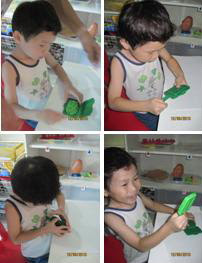 Literacy skill development has enhanced and improved his tracking skill from LtoR & TtoB. He is also able to name & recognize more line picture cards & photo cards on object, transport or animals via fresh card. Applying the habits of using What, Where and Why in working with him or during real life situation and modelling for him on the appropriate answer according to the context for better receptive language and sentence contruction is also on going. Pairing of things that go together in relation to our daily life application, cause and effect in relation to child behavior. Look, Listen & execute, pretend play on making ice-cream using play doh etc...are some of the skill introduced. We have also take opportunity to work on Yes/No during our literacy home program via discrete trial to acertain his understanding. Making use of the ice-berg framework to understand what is behind any negative output from the child instead of just conclude by seeing the tip of the ice-berg really help to progress in managing any successful outcome. We are almost certain that he knows & understands the use of yes & no. Else perhaps we can introduce "Not sure" for any uncertain element that arises beyond his knowledge capacity before we teach the child to get familiar.
 For numeric skill, he has covered number 1-100, rotational/random sequence, money value, time telling.
Moving on from where I last left, the end of term PCN is another great session in sharing our children's learning journey together with the teachers, get updates from principle on things happening and what is to come in the new term, more imporantly to acquire new knowledge sharing from consultant in managing some learning & behavior challenges in our walk with Autism. The topic on Task Analaysis provides me with better insight as to how we can seek opportunity in our daily life with our kid in breaking down some tasks into small manageable ones and work backward until he gain independence. I am proud that our little STAR, Fabian has  managed to achieve 2 tasks through this inspiration namely buckle of seat belt & button of shirt, while before that he use to do only the last step or 2. We will work with him on other independence skills such as putting on clothes or socks, where again he only do the last steps or 2 and has potential to improve using similar task analysis approach.
 managed to achieve 2 tasks through this inspiration namely buckle of seat belt & button of shirt, while before that he use to do only the last step or 2. We will work with him on other independence skills such as putting on clothes or socks, where again he only do the last steps or 2 and has potential to improve using similar task analysis approach.
Fabian also has the previledge to work with more different adults since Term 2, with enrollment to pre-school child care center, engaging ST, Special Need Therapist for Literacy & Numeric Skill Development. We are glad that our little STAR is able to adapt to different teaching styles and approaches whether bottom up or top down and still enjoy & have fun learning any new skills being introduced. The inputs from various service providers certainly have given us better understanding as to how we can work harder in partnership & do better in self empowerment to improve the child's learning & development further. Our challenges is to sync all of these collective effort from various teachers & therapists to meet at the center in optimizing Fabian's learning potential to maximize positive outcome.

Fabian had completed 2 rounds of sound therapy and currently taking his 2 weeks break before resuming with third cycle. In receptive listening, his attention span has increased. For expressive listening, he is singing more and playing with sounds with much more awareness. His executive function has also improved, more eye contact and has better sense of ryhthm.
He had also recently completed his 4 month kindermuzic which has further enhanced his focus, listening skill, language and literacy, hand-eye co-ordination & offer opportunity to elevate his social skill woth other kids. 
 Effort from OT has also been rewarded with better return in find motor skills such as balancing and body joint co-ordination and movement. Our recent discussion with the therapy has agree in focusing on his sensory & posture control while aligning with ST on the same note in communciation.

 Effort from OT has also been rewarded with better return in find motor skills such as balancing and body joint co-ordination and movement. Our recent discussion with the therapy has agree in focusing on his sensory & posture control while aligning with ST on the same note in communciation.
 Literacy skill development has enhanced and improved his tracking skill from LtoR & TtoB. He is also able to name & recognize more line picture cards & photo cards on object, transport or animals via fresh card. Applying the habits of using What, Where and Why in working with him or during real life situation and modelling for him on the appropriate answer according to the context for better receptive language and sentence contruction is also on going. Pairing of things that go together in relation to our daily life application, cause and effect in relation to child behavior. Look, Listen & execute, pretend play on making ice-cream using play doh etc...are some of the skill introduced. We have also take opportunity to work on Yes/No during our literacy home program via discrete trial to acertain his understanding. Making use of the ice-berg framework to understand what is behind any negative output from the child instead of just conclude by seeing the tip of the ice-berg really help to progress in managing any successful outcome. We are almost certain that he knows & understands the use of yes & no. Else perhaps we can introduce "Not sure" for any uncertain element that arises beyond his knowledge capacity before we teach the child to get familiar.
 For numeric skill, he has covered number 1-100, rotational/random sequence, money value, time telling.
For ST, we have learnt to integrate imagery & language, what are the two type imagery namely symbol(parts) & concept(wholes). How to apply it in sensory-language play with the kid through touching and gesturing. we have also learn to use more alternative verb to make request like need, like, see or hear. And also making request using May I... or Can I...He is now able to answer to some common questions when prompted. We are currently working with Fabian to comment about an action in our daily life routine as well as with the help of action picture cards in collaboration with ST.
I have also had a discussion with the child care center teacher in charge and truely grateful for her & the team for showing great empathy and support to Fabian, feedback has been positive so far with improvement over previous 2 months, I had also share some insight in managing Fabian's learning & behavior characteristic. I have also encouraged the teachers to feedback any challenges  encounter along the way, so that I can see what we can do to improve at home with more trial and practise.
 encounter along the way, so that I can see what we can do to improve at home with more trial and practise.
The June holidays have bee great so far,we had crossed over the causeway for a weekend lunch & shopping on the first week in JB, and attended a chalet resort holidays at Costa Sands in Downtown East on the second weekend. During holiday weekdays, Fabian will attend full day child care center except Thur & Fri(2nd half) as he is engaged with therapists on these 2 days, weekend is a precious time spent for Fabian's home programs and practise, plus some family engagement to strike a fine balance.
We still have some 2 weeks of holidays to go before new term opening, just wish to take this blessing to express my heart felt gratitude to all who have crossed path with us and supported Fabian in our stand with him.
Recently, Autism has been in the news, thanks to 2 NTU students who had taken their time & effort to shed light on the plight of adults with autism as their final year project, I am so touch for their worth while effort to bring more awareness to the society & community at large. To us parents of child with ASD, each individual child in this spectrum is unique, we need more empathy and understanding from the general public. Walking on a journey with Autism is actually our work-life balance:- We work hard to create an impact for their future life, so that the child can grow up to be independent and more manageable adult as their parents age gracefully. Some days, hope is all we need, other days, hope is all we have.
Winners Statement:-
"Limitations live only in our minds. But if we use our imaginations, our possibilities become limitless." ~ Jamie Paolinetti
Sunday, June 6, 2010
Sharing A Post Addressing The Needs Of Adolescents & Adults with ASD
Was originally posted by Ruth Carper, Ph.D. Dr. Carper who is a member of the research faculty of the Center for Human Development at the University of California San Diego). She is beginning a study on the cognitive and behavioral changes that occur in people with ASD over the age of 30 years, and on the support services that are available to people in this age group.
Kids with ASD get lots of attention in the media, in research, etc. But what happens when those kids are 20? Or 40? These kids we see today will grow up, do grow up. They will become adults, some able to function independently, go to college, and have “normal” lives. Others will move to group homes or supported living services, and some will stay at home with family. But they will grow up and there are a great many issues that families must contend with and plan for and a great deal of information that service providers and scientists don’t yet have.
In the past, studies of long-term outcome in adults with ASD only looked at very basic measures. Outcomes were classified as ‘good’ or ‘poor’ based primarily on independence – holding a job, living outside of the parents’ home – and simple measures of overall intelligence. While this information is useful, it doesn’t provide much detail about how relevant symptoms and specific abilities change during adolescence and adulthood. Social skills often improve, but we don’t yet know to what degree, or whether skills continue to improve across the lifespan. Repetitive behaviors are thought to diminish or change in quality. Only recently has research begun which will help us to understand how symptoms and abilities change as people with ASD grow up.
At the recent International Meeting for Autism Research (IMFAR), the special Educational Symposium “What Really Matters: Measuring Outcome and Addressing the Needs of Adolescents and Adults with ASD” introduced some of these issues. (The symposium was organized and moderated by Drs. Patricia Howlin and Peter Szatmari. Presentations were given by Julie Taylor, Themba Carr, Somer Bishop, and Kaite Gotham.) While a short symposium can only scratch at the surface of such a broad topic, the information offered was informative and is summarized below. However, the thing that struck me most about the session was that it was standing room only, showing the growing interest and attention that will be paid to the needs of adults and adolescents with autism.
The transition to adulthood
Our education system provides appropriate (more or less) training as mandated by IDEA until the child reaches 22 years of age. But access to services changes drastically after that, with many services no longer available to young adults. This time of transition can have a major impact on young adults with ASD and on their families. Any parent reading this blog knows that change can be quite stressful for an adult or child with autism. The drastic changes to daily routine, structure, and social opportunities can affect mood, anxiety, and behavior. One study examined the challenges that occur during the period as the individual exits the school system.
The daily routine, structure, and social opportunities that are provided by the school setting, as well the behavioral interventions that may be implemented there, generally help to improve the child’s social skills and behaviors. Not surprisingly, the loss of these opportunities reduces the rate of that improvement and may even result in setbacks. Researchers followed a group of children and young adults during their school years and saw a continuing reduction in the frequency of unwanted repetitive behaviors, ongoing improvement in pro-social behavior, and improvement in internalized behavior. Unfortunately, when these children left high school, their rates of improvement slowed substantially. For the most part behavior didn’t get worse, but the change in rate suggests that further gains may have been possible but that those opportunities were missed. If structured services were more available for adults with ASD, substantial gains might continue.
Depression
In addition to the behavioral and cognitive issues that define autism, additional problems may arise. The challenges of living with autism can produce anxiety and depression both in people with autism and in their families and caregivers. This may be particularly problematic for higher functioning individuals. Even among adults who do not have autism, greater awareness of one’s own social limitations or poor social skills, is known to correlate with depression. Higher functioning people with ASD generally have greater insight into their own limitations and that may affect mood or produce anxiety. Insight into a person’s prospects for independent living is also a predictor of depression.
More cognitively impaired people with autism may be somewhat protected from these secondary stressors simply by being less aware of their own limitations. But it’s difficult for us to know. Communication skills are poor of course, but it’s particularly difficult for them to communicate about abstract concepts such as emotions. A range of emotions is certainly felt, but can’t be described in words. And the overt symptoms that can be indicators of depression in young children with similar language difficulties, may not be telling in autism. Typical hallmarks of depression such as changes in appetite or sleep patterns are often abnormal in ASD even without depression.
Effects on the family: Cultural differences
Having a child with autism, whether he is still a child or is an adult, can have a substantial effect on the life of the parent. Family relationships can be affected, friendships, activities, and finances, can all be affected. In a survey of parents, mothers were asked to reflect on the degree to which their child’s ASD had affected their own lives and compared the effects reported by African American and Caucasian mothers of different levels of education. Caucasian parents generally reported a greater negative impact on their daily lives than did African American families. The moms that reported the least negative impact were African American parents with less education (e.g. high school as opposed to college). This suggests that these families are better able to cope on a personal and emotional level than other families. This is somewhat surprising given that these moms probably did not have the same financial resources that are typically available to families with more education. This may also be surprising in light of the reported difference in services utilized by these families. During the school years, Caucasian children with ASD receive many more hours of treatment outside of school than do African American families. However, it is unknown if this reflects a true difference in access, or is a result of the lower perceived impact.
Summary
The above is only able to discuss a small part of the very large topic of adolescence and adulthood in autism. We still need to know more about how abilities and symptoms change in the longer term, into middle age and even into senior years. Families still need to know if sufficient care services are available and are appropriate for their adult children. We need to know what interventions, training programs, and other support services are most effective for improving quality of life. We certainly need more funding agencies, to direct effort toward these issues, specifically asking for more research on later portions of the lifespan in autism. With sufficient funding, research may follow, so we can expect a better understanding of these issues in the coming years.
Winners Statement:-
''When inspiration does not come to me, I go halfway to meet it.'' (Sigmund Freud)
Kids with ASD get lots of attention in the media, in research, etc. But what happens when those kids are 20? Or 40? These kids we see today will grow up, do grow up. They will become adults, some able to function independently, go to college, and have “normal” lives. Others will move to group homes or supported living services, and some will stay at home with family. But they will grow up and there are a great many issues that families must contend with and plan for and a great deal of information that service providers and scientists don’t yet have.
In the past, studies of long-term outcome in adults with ASD only looked at very basic measures. Outcomes were classified as ‘good’ or ‘poor’ based primarily on independence – holding a job, living outside of the parents’ home – and simple measures of overall intelligence. While this information is useful, it doesn’t provide much detail about how relevant symptoms and specific abilities change during adolescence and adulthood. Social skills often improve, but we don’t yet know to what degree, or whether skills continue to improve across the lifespan. Repetitive behaviors are thought to diminish or change in quality. Only recently has research begun which will help us to understand how symptoms and abilities change as people with ASD grow up.
At the recent International Meeting for Autism Research (IMFAR), the special Educational Symposium “What Really Matters: Measuring Outcome and Addressing the Needs of Adolescents and Adults with ASD” introduced some of these issues. (The symposium was organized and moderated by Drs. Patricia Howlin and Peter Szatmari. Presentations were given by Julie Taylor, Themba Carr, Somer Bishop, and Kaite Gotham.) While a short symposium can only scratch at the surface of such a broad topic, the information offered was informative and is summarized below. However, the thing that struck me most about the session was that it was standing room only, showing the growing interest and attention that will be paid to the needs of adults and adolescents with autism.
The transition to adulthood
Our education system provides appropriate (more or less) training as mandated by IDEA until the child reaches 22 years of age. But access to services changes drastically after that, with many services no longer available to young adults. This time of transition can have a major impact on young adults with ASD and on their families. Any parent reading this blog knows that change can be quite stressful for an adult or child with autism. The drastic changes to daily routine, structure, and social opportunities can affect mood, anxiety, and behavior. One study examined the challenges that occur during the period as the individual exits the school system.
The daily routine, structure, and social opportunities that are provided by the school setting, as well the behavioral interventions that may be implemented there, generally help to improve the child’s social skills and behaviors. Not surprisingly, the loss of these opportunities reduces the rate of that improvement and may even result in setbacks. Researchers followed a group of children and young adults during their school years and saw a continuing reduction in the frequency of unwanted repetitive behaviors, ongoing improvement in pro-social behavior, and improvement in internalized behavior. Unfortunately, when these children left high school, their rates of improvement slowed substantially. For the most part behavior didn’t get worse, but the change in rate suggests that further gains may have been possible but that those opportunities were missed. If structured services were more available for adults with ASD, substantial gains might continue.
Depression
In addition to the behavioral and cognitive issues that define autism, additional problems may arise. The challenges of living with autism can produce anxiety and depression both in people with autism and in their families and caregivers. This may be particularly problematic for higher functioning individuals. Even among adults who do not have autism, greater awareness of one’s own social limitations or poor social skills, is known to correlate with depression. Higher functioning people with ASD generally have greater insight into their own limitations and that may affect mood or produce anxiety. Insight into a person’s prospects for independent living is also a predictor of depression.
More cognitively impaired people with autism may be somewhat protected from these secondary stressors simply by being less aware of their own limitations. But it’s difficult for us to know. Communication skills are poor of course, but it’s particularly difficult for them to communicate about abstract concepts such as emotions. A range of emotions is certainly felt, but can’t be described in words. And the overt symptoms that can be indicators of depression in young children with similar language difficulties, may not be telling in autism. Typical hallmarks of depression such as changes in appetite or sleep patterns are often abnormal in ASD even without depression.
Effects on the family: Cultural differences
Having a child with autism, whether he is still a child or is an adult, can have a substantial effect on the life of the parent. Family relationships can be affected, friendships, activities, and finances, can all be affected. In a survey of parents, mothers were asked to reflect on the degree to which their child’s ASD had affected their own lives and compared the effects reported by African American and Caucasian mothers of different levels of education. Caucasian parents generally reported a greater negative impact on their daily lives than did African American families. The moms that reported the least negative impact were African American parents with less education (e.g. high school as opposed to college). This suggests that these families are better able to cope on a personal and emotional level than other families. This is somewhat surprising given that these moms probably did not have the same financial resources that are typically available to families with more education. This may also be surprising in light of the reported difference in services utilized by these families. During the school years, Caucasian children with ASD receive many more hours of treatment outside of school than do African American families. However, it is unknown if this reflects a true difference in access, or is a result of the lower perceived impact.
Summary
The above is only able to discuss a small part of the very large topic of adolescence and adulthood in autism. We still need to know more about how abilities and symptoms change in the longer term, into middle age and even into senior years. Families still need to know if sufficient care services are available and are appropriate for their adult children. We need to know what interventions, training programs, and other support services are most effective for improving quality of life. We certainly need more funding agencies, to direct effort toward these issues, specifically asking for more research on later portions of the lifespan in autism. With sufficient funding, research may follow, so we can expect a better understanding of these issues in the coming years.
Winners Statement:-
''When inspiration does not come to me, I go halfway to meet it.'' (Sigmund Freud)
Tuesday, June 1, 2010
Sharing Some Advices For Parents With A Newly Diagnosed Child?
Our Own Experience
----------------------
My little STAR was diagnosed and confirmed back in July 2008.
While waiting for diagnosis results from child pschologist, we searched through and understand via internet websites what Autism is all about, check with a friend who is also parent of a child with ASD to understand their initial journey, seek strength and inspiration to ready for acceptance, adaptation to embrace some changes in this life long learning journey.
First year as young parents, read quite a bit about Autism until now, attend workshop related to various aspect of growing & walking with my Little STAR. DIY PECS, visual rules, work system, choice making, first-then schedule, task analysis, plenty of hypothesis and trial on learning & challenging behaviors. Taken many photos & share quite a bit with teachers on some home programs or engagement activities for continuous progress in collaboration at EIP.
As parents of child with ASD, the demand in attention is at least 10X that of neuro-typical kids in walking this special journey of learning, we need to read others material to strengthen your thoughts for more postive & purposeful life, knowing that we have to Love the child unconditionally, without fear and most important of all without getting tire. 3 Es needed are Enthusiasm, Excitement and Energy, 3 Ps to supplement are Patience, Passion & Persistence. We must self-empowered to be a strong believer in the principle of behavior that things always get difficult before they become easy and not before we inject them with effort of 3Es & 3 Ps. Take each day as a new learning journey to explore & look for opportunities to grow & progress in baby steps, always tell the child "I love you".
Take this blessing to consolidate some advices from parents who are also walking in this journey of Autism:-
-Just breathe. And read, read, read. Educate your self because it will be the best way to know what to do for your child
-It may seem like the end of the world right now, but it's not. It's going to be a challenge, but every achievement and milestone will be a victory. Don't lose hope. It does get better, and early intervention is key.
-Acceptance is vital. then get that sweet child of yours as much education as possible, meaning ot,st, socialization...etc. they learn and retain so much!! try to be positive, even when "autism" gets the best of you. Remember, that you are not alone.
-When we were first diagnosed a neighbor with a special needs child said don't think a year, 5 years or ten yearsdown the road. Focus on what is the right thing for your child right now. Those words stay with me all the time
-Don't blame yourself. And do not let yourself get in the dumps. Don't isolate yourself, either. Don't let yourself see the situation as hopeless. And always remember you are your child's best advocate. Don't be afraid to make yourself heard on their behalf. Celebrate each milestone, no matter how delayed it is. Celebrate each achievement they make, no matter how small. Tell them you are proud of them. It's ok to cry. Find someone you can talk to when the going gets rough. Always tell your child you love them.
-Patience, and continuity always follow thru what you start, and never give in because you feel bad. What you do now will effect your child as an adult if they don't learn the skill from you, they will be unhappy adults. So take each day as it comes and never give up
-I think the best advice is don't give advice! Just be there and keep showing up, showing your love, sharing your lives. That's what helped us the most, those who didn't offer advice but just stayed here in our lives, living and showing us what works for them and what it means to be them.
Hope it helps, Hope for Everything & Give off Your Best! I am also learning along as I shared.
Appreciating your life right now is as important as going for your goals.
Winner's Statement:-
The talent for being happy is appreciating and liking what you have, instead of what you don't have.~ Woody Allen
----------------------
My little STAR was diagnosed and confirmed back in July 2008.
While waiting for diagnosis results from child pschologist, we searched through and understand via internet websites what Autism is all about, check with a friend who is also parent of a child with ASD to understand their initial journey, seek strength and inspiration to ready for acceptance, adaptation to embrace some changes in this life long learning journey.
First year as young parents, read quite a bit about Autism until now, attend workshop related to various aspect of growing & walking with my Little STAR. DIY PECS, visual rules, work system, choice making, first-then schedule, task analysis, plenty of hypothesis and trial on learning & challenging behaviors. Taken many photos & share quite a bit with teachers on some home programs or engagement activities for continuous progress in collaboration at EIP.
As parents of child with ASD, the demand in attention is at least 10X that of neuro-typical kids in walking this special journey of learning, we need to read others material to strengthen your thoughts for more postive & purposeful life, knowing that we have to Love the child unconditionally, without fear and most important of all without getting tire. 3 Es needed are Enthusiasm, Excitement and Energy, 3 Ps to supplement are Patience, Passion & Persistence. We must self-empowered to be a strong believer in the principle of behavior that things always get difficult before they become easy and not before we inject them with effort of 3Es & 3 Ps. Take each day as a new learning journey to explore & look for opportunities to grow & progress in baby steps, always tell the child "I love you".
Take this blessing to consolidate some advices from parents who are also walking in this journey of Autism:-
-Just breathe. And read, read, read. Educate your self because it will be the best way to know what to do for your child
-It may seem like the end of the world right now, but it's not. It's going to be a challenge, but every achievement and milestone will be a victory. Don't lose hope. It does get better, and early intervention is key.
-Acceptance is vital. then get that sweet child of yours as much education as possible, meaning ot,st, socialization...etc. they learn and retain so much!! try to be positive, even when "autism" gets the best of you. Remember, that you are not alone.
-When we were first diagnosed a neighbor with a special needs child said don't think a year, 5 years or ten yearsdown the road. Focus on what is the right thing for your child right now. Those words stay with me all the time
-Don't blame yourself. And do not let yourself get in the dumps. Don't isolate yourself, either. Don't let yourself see the situation as hopeless. And always remember you are your child's best advocate. Don't be afraid to make yourself heard on their behalf. Celebrate each milestone, no matter how delayed it is. Celebrate each achievement they make, no matter how small. Tell them you are proud of them. It's ok to cry. Find someone you can talk to when the going gets rough. Always tell your child you love them.
-Patience, and continuity always follow thru what you start, and never give in because you feel bad. What you do now will effect your child as an adult if they don't learn the skill from you, they will be unhappy adults. So take each day as it comes and never give up
-I think the best advice is don't give advice! Just be there and keep showing up, showing your love, sharing your lives. That's what helped us the most, those who didn't offer advice but just stayed here in our lives, living and showing us what works for them and what it means to be them.
Hope it helps, Hope for Everything & Give off Your Best! I am also learning along as I shared.
Appreciating your life right now is as important as going for your goals.
Winner's Statement:-
The talent for being happy is appreciating and liking what you have, instead of what you don't have.~ Woody Allen
Saturday, May 29, 2010
Sharing Of Any Essay: In Their Own Words – I Have Autism
I have autism. I hold only a few similarities to the character in “Rain Man.” When I am out on the playground, never say to my mother, “I would have never guessed that; he looks so normal” The face of autism is not a defined one.
I have autism. This does not mean I am deaf, nor does it mean I can’t understand your words. When cruel things are said, it hurts just like it would anyone else. Sometimes even more, as I am very sensitive.
I have autism. I am not blind. When you stare at me, point, and whisper – I don’t like it. I sometimes cannot control my emotions; however, I still can see you.
I have autism. I am not spoiled, undisciplined, or disrespectful intentionally. Don’t tell my parents I just need to be smacked, as that would never work and I smack back! All I know is if I am being hurt I must defend myself.
I have autism. This does not mean I am mentally delayed. I am very smart. I may focus on only a few things, but I have become an expert on them.
I have autism. Don’t think I am not capable of love or am emotionally detached from the world around me. I am very close to my family and sometimes need to be hugged. I do have the capacity to care. Especially if I see someone else being hurt or teased.
I have autism. I will line things up on the floor in my room in perfect order. This may be strange, but to me it is contentment. I can only relax if things are in sync.
I have autism. Which means I am supersensitive to sounds; I hear all of them. Even the smallest of sounds. When I get overloaded with too many sounds at once, It is hard to cope and I must step away and be alone. This does not mean I can’t handle the world, I just have to have more time to tune out as I hear more than everyone.
I have autism. I live by schedules. This is one of the ways I have found to cope with the chaos around me. Knowing what is going to happen at a certain time each day helps me prepare for transitions. That is why it is difficult for me to deal with a schedule change. I have to have order to obtain peace.
I have autism. It is very important for people to mean what they say That is why joking with me is never understood. Things are black and white to me, like a set schedule. If you say you are going to turn blue in five minutes, I expect you to do so.
So remember, having autism does not mean I am blind, retarded, unresponsive, incapable of love, or unable to function in the real world. I am unique and gifted because I have found a way to coexist within two very separate worlds. Take a moment to think about how many of us have difficulty within just the one world we live, now imagine juggling two. This is something I have learned to do. So forgive me if at times I have trouble separating the two, again I am only human.
I often hear people say to my mom, “It must be so hard for you” – no one ever says that to me. In fact, no one expects me to understand or respond because of the face society has painted autism to be. I do not know all that autism is, but I know who I am. I am special, and cherished. Almost like a superhero I was set aside to have these unique abilities. They are not a disability. They are not something to fear. In a way they are magical. I have unlocked parts of my brain that others cannot.
When you look at me, don’t look at me with sadness or feel sorry for me. Look at me with wonderment and I will amaze you every time.
This “In Their Own Words” essay is written by Tonya Procor, a loving mother of a son with autism
Winners Statement:- ''If a man does not keep pace with his companions, perhaps it is because he hears a different drummer. Let him step to the music which he hears, however measured or far away.'' (Henry David Thoreau)
I have autism. This does not mean I am deaf, nor does it mean I can’t understand your words. When cruel things are said, it hurts just like it would anyone else. Sometimes even more, as I am very sensitive.
I have autism. I am not blind. When you stare at me, point, and whisper – I don’t like it. I sometimes cannot control my emotions; however, I still can see you.
I have autism. I am not spoiled, undisciplined, or disrespectful intentionally. Don’t tell my parents I just need to be smacked, as that would never work and I smack back! All I know is if I am being hurt I must defend myself.
I have autism. This does not mean I am mentally delayed. I am very smart. I may focus on only a few things, but I have become an expert on them.
I have autism. Don’t think I am not capable of love or am emotionally detached from the world around me. I am very close to my family and sometimes need to be hugged. I do have the capacity to care. Especially if I see someone else being hurt or teased.
I have autism. I will line things up on the floor in my room in perfect order. This may be strange, but to me it is contentment. I can only relax if things are in sync.
I have autism. Which means I am supersensitive to sounds; I hear all of them. Even the smallest of sounds. When I get overloaded with too many sounds at once, It is hard to cope and I must step away and be alone. This does not mean I can’t handle the world, I just have to have more time to tune out as I hear more than everyone.
I have autism. I live by schedules. This is one of the ways I have found to cope with the chaos around me. Knowing what is going to happen at a certain time each day helps me prepare for transitions. That is why it is difficult for me to deal with a schedule change. I have to have order to obtain peace.
I have autism. It is very important for people to mean what they say That is why joking with me is never understood. Things are black and white to me, like a set schedule. If you say you are going to turn blue in five minutes, I expect you to do so.
So remember, having autism does not mean I am blind, retarded, unresponsive, incapable of love, or unable to function in the real world. I am unique and gifted because I have found a way to coexist within two very separate worlds. Take a moment to think about how many of us have difficulty within just the one world we live, now imagine juggling two. This is something I have learned to do. So forgive me if at times I have trouble separating the two, again I am only human.
I often hear people say to my mom, “It must be so hard for you” – no one ever says that to me. In fact, no one expects me to understand or respond because of the face society has painted autism to be. I do not know all that autism is, but I know who I am. I am special, and cherished. Almost like a superhero I was set aside to have these unique abilities. They are not a disability. They are not something to fear. In a way they are magical. I have unlocked parts of my brain that others cannot.
When you look at me, don’t look at me with sadness or feel sorry for me. Look at me with wonderment and I will amaze you every time.
This “In Their Own Words” essay is written by Tonya Procor, a loving mother of a son with autism
Winners Statement:- ''If a man does not keep pace with his companions, perhaps it is because he hears a different drummer. Let him step to the music which he hears, however measured or far away.'' (Henry David Thoreau)
Thursday, May 27, 2010
Overcoming Yourself (Sharing This Note)
“You are who you think you are”… this is very true in every aspect of that statement. It is not difficult to see that we are often our biggest obstacle… not the problem itself… not the people around us… not fate… not destiny… In every situation (even in the worst), there is always a brighter side of things… a positive side that we can focus on…
So how do we move from a state of helplessness to a state of empowerment? How do we overcome those negative thoughts that are distracting you and keeping you from moving ahead? How do we overcome ourselves?
When something bad happens (and I can tell you.. bad things will ALWAYS happen), there are two ways that we can respond to it... react negatively to it… or react positively to it… We all know the consequence of our negative response and the need to respond positively. Then why it is easier said than done? Is responding positively really so difficult?
Honestly, there may be a million answers why humans respond negatively when they know that they shouldn’t. I’m sure I can write a quite an endless list of it but why would I want to do that? Do you see where I’m heading? I mean why spend good energy & efforts to try to measure something that will give you an undesirable outcome anyway? Isn’t that unproductive? Why don’t we focus on the positive thoughts? But how to do that when negative thoughts keep popping up before you? (familiar?)
Here’s how I do it. I saw a joke about a problem solving flowchart and I thought to myself that the answer could be in a simple flowchart below:-

Well, if you’re the sort that screams… “but… but”… GET REAL… GET DECISIVE… In life, there are not but’s.. I mean, seriously,… if you cannot solve the problem and nothing can be done about it, then dwelling on it or feeling lousy about it (till the cows come home) ain’t gonna help either. Discard those contemplating negative thoughts immediately before they consume you.
And if you’re the type that goes… “what if this”… “what if that”…. Try using “so what if” and “so what are you doing about it?” instead… For example:“So what if I have cancer? What am I gonna do about it?”… “So what if I’m a bankrupt? What am I gonna do about it?”… “So what if I’m gonna die tomorrow? What am I gonna do about it?”…
You see, it is not “what if I’m gonna die tomorrow” that will matter… it is what you decide to do AFTER you make that statement “so what?”… “So what if I’m gonna die tomorrow? I still have now till tomorrow to be happy?” THAT… my friends… is what makes the difference… Instead of sulking your way to your grave, won’t one be better off enjoying whatever one has left till then..
In this perspective, the problem don’t matter anymore. Since you cannot do anything to change the destination, you can always choose how you wanna get there, right?
Winners Statement:-
'Plant the seed of desire in your mind and it forms a nucleus with power to attract to itself everything needed for its fulfillment'' (Robert Collier)
Cheers & God Bless!
Tuesday, May 25, 2010
Ten ways to build your child's self-esteem(By Sarah Henry)
Nurturing your child's self-esteem may seem like a hefty responsibility. After all, a feeling of self-worth lays the foundation for your child's future as he sets out to try new things on his own. "Self-esteem comes from having a sense of belonging, believing that we're capable, and knowing our contributions are valued and worthwhile," says California family therapist Jane Nelsen, co-author of the Positive Discipline series."
As any parent knows, self-esteem is a fleeting experience," says Nelsen. "Sometimes we feel good about ourselves and sometimes we don't. What we are really trying to teach our kids are life skills like resiliency." Your goal as a parent is to ensure that your child develops pride and self-respect — in himself and in his cultural roots — as well as faith in his ability to handle life's challenges (for a school-age child that may mean giving a dance performance for you). Here are ten simple strategies to help boost your child's self-esteem:
Give unconditional love. A child's self-esteem flourishes with the kind of no-strings-attached devotion that says, "I love you, no matter who you are or what you do." Your child benefits the most when you accept him for who he is regardless of his strengths, difficulties, temperament, or abilities. So, lavish him with love. Give him plenty of cuddles, kisses, and pats on the shoulder. And don't forget to tell him how much you love him. When you do have to correct your child, make it clear that it's his behavior — not him — that's unacceptable. For instance, instead of saying, "You're a naughty boy! Why can't you be good?" say, "Please don't throw the football in the house. A football is an outside toy."
Pay attention. Carve out time to give your child your undivided attention. That does wonders for your child's feelings of self-worth because it sends the message that you think he's important and valuable. It doesn't have to take a lot of time; it just means taking a moment to stop flicking through the mail if he's trying to talk with you or turning off the TV long enough to answer a question. Make eye contact so it's clear that you're really listening to what he's saying. When you're strapped for time, let your child know it without ignoring his needs. Say, "Tell me all about what happened at soccer practice, and then when you're finished, I'll need to make our dinner."
Teach limits. Establish a few reasonable rules for your child. For instance, if you tell him to wear his helmet when he rides his bike in the driveway, don't let him go without it at his friend's house. Knowing that certain family rules are set in stone will help him feel more secure. He'll start to live by your expectations soon enough. Just be clear and consistent and show him that you trust him and expect him to do the right thing.
Support healthy risks. Encourage your child to explore something new, such as trying a different food, making a new friend, or riding a skateboard. Though there's always the possibility of failure, without risk there's little opportunity for success. So let your child safely experiment, and resist the urge to intervene. For instance, try not to "rescue" him the minute he's showing mild frustration at figuring out how to read a tricky word. Jumping in to say, "I'll do it" can foster dependence and diminish your child's confidence. You'll build his self-esteem by balancing your need to protect him with his need to tackle new tasks.
Let mistakes happen. The flip side, of course, of having choices and taking risks is that sometimes your child is bound to make mistakes. These are valuable lessons for your child's confidence. So if your child misses the school bus because he was dawdling in his bedroom, encourage him to think about what he might do differently next time. That way his self-esteem won't sag and he'll understand that it's okay to make mistakes sometimes. When you goof up yourself, admit it, says Daniel Meier, assistant professor of elementary education at San Francisco State University. Acknowledging and recovering from your mistakes sends a powerful message to your child — it makes it easier for your child to accept his own difficulties.
Celebrate the positive. Everyone responds well to encouragement, so make an effort to acknowledge the good things your child does every day within his earshot. For instance, tell his dad, "Peter did all his chores today without prompting." He'll get to bask in the glow of your praise and his dad's heartening response. And be specific. Instead of saying "Good job," say, "Thank you for setting the table for dinner." This will enhance his sense of accomplishment and self-worth and let him know exactly what he did right.
Listen well. If your child needs to talk, stop and listen to what he has to say. He needs to know that his thoughts, feelings, desires, and opinions matter. Help him get comfortable with his emotions by labeling them. Say, "I understand you're sad because you can't go to the sleepover." By accepting his emotions without judgment, you validate his feelings and show that you value what he has to say. If you share your own feelings ("I'm worried about Grandma. She's very sick"), he'll gain confidence in expressing his own.
Resist comparisons. Comments such as "Why can't you be more like your brother?" or "Why can't you be nice like Evan?" will just remind your child of where he struggles in a way that fosters shame, envy, and competition. Even positive comparisons, such as "You're the best player" are potentially damaging because a child can find it hard to live up to this image. If you let your child know that you appreciate him for the unique individual he is, he'll be more likely to value himself too.
Offer empathy. If your child compares himself unfavorably to his siblings or peers ("Why can't I throw a football like Nicholas?"), show him empathy and then emphasize one of his strengths. For instance, say, "You're right. Nicholas is good at throwing a football. And you're a fast runner." This can help your child learn that we all have strengths and weaknesses, and that he doesn't have to be perfect to feel good about himself.
Provide encouragement. Every child needs the kind of support from loved ones that signals, "I believe in you. I see your effort. Keep going!" Encouragement means acknowledging progress — not just rewarding achievement. So if your child is struggling with a math problem, say: "You're trying very hard and you almost have it!" instead of "Not like that. Let me do it."
There's a difference between praise and encouragement. One rewards the task while the other rewards the person ("You did it!" rather than "I'm proud of you!"). Praise can make a child feel that he's only "good" if he does something perfectly. Encouragement, on the other hand, acknowledges the effort. "Tell me about the game. I saw you really hustling out there" is more helpful than saying, "You're the best player on the team." Too much praise can sap self-esteem because it can create pressure to perform and set up a continual need for approval from others. So dole out the praise judiciously and offer encouragement liberally; it will help your child grow up to feel good about himself.
As any parent knows, self-esteem is a fleeting experience," says Nelsen. "Sometimes we feel good about ourselves and sometimes we don't. What we are really trying to teach our kids are life skills like resiliency." Your goal as a parent is to ensure that your child develops pride and self-respect — in himself and in his cultural roots — as well as faith in his ability to handle life's challenges (for a school-age child that may mean giving a dance performance for you). Here are ten simple strategies to help boost your child's self-esteem:
Give unconditional love. A child's self-esteem flourishes with the kind of no-strings-attached devotion that says, "I love you, no matter who you are or what you do." Your child benefits the most when you accept him for who he is regardless of his strengths, difficulties, temperament, or abilities. So, lavish him with love. Give him plenty of cuddles, kisses, and pats on the shoulder. And don't forget to tell him how much you love him. When you do have to correct your child, make it clear that it's his behavior — not him — that's unacceptable. For instance, instead of saying, "You're a naughty boy! Why can't you be good?" say, "Please don't throw the football in the house. A football is an outside toy."
Pay attention. Carve out time to give your child your undivided attention. That does wonders for your child's feelings of self-worth because it sends the message that you think he's important and valuable. It doesn't have to take a lot of time; it just means taking a moment to stop flicking through the mail if he's trying to talk with you or turning off the TV long enough to answer a question. Make eye contact so it's clear that you're really listening to what he's saying. When you're strapped for time, let your child know it without ignoring his needs. Say, "Tell me all about what happened at soccer practice, and then when you're finished, I'll need to make our dinner."
Teach limits. Establish a few reasonable rules for your child. For instance, if you tell him to wear his helmet when he rides his bike in the driveway, don't let him go without it at his friend's house. Knowing that certain family rules are set in stone will help him feel more secure. He'll start to live by your expectations soon enough. Just be clear and consistent and show him that you trust him and expect him to do the right thing.
Support healthy risks. Encourage your child to explore something new, such as trying a different food, making a new friend, or riding a skateboard. Though there's always the possibility of failure, without risk there's little opportunity for success. So let your child safely experiment, and resist the urge to intervene. For instance, try not to "rescue" him the minute he's showing mild frustration at figuring out how to read a tricky word. Jumping in to say, "I'll do it" can foster dependence and diminish your child's confidence. You'll build his self-esteem by balancing your need to protect him with his need to tackle new tasks.
Let mistakes happen. The flip side, of course, of having choices and taking risks is that sometimes your child is bound to make mistakes. These are valuable lessons for your child's confidence. So if your child misses the school bus because he was dawdling in his bedroom, encourage him to think about what he might do differently next time. That way his self-esteem won't sag and he'll understand that it's okay to make mistakes sometimes. When you goof up yourself, admit it, says Daniel Meier, assistant professor of elementary education at San Francisco State University. Acknowledging and recovering from your mistakes sends a powerful message to your child — it makes it easier for your child to accept his own difficulties.
Celebrate the positive. Everyone responds well to encouragement, so make an effort to acknowledge the good things your child does every day within his earshot. For instance, tell his dad, "Peter did all his chores today without prompting." He'll get to bask in the glow of your praise and his dad's heartening response. And be specific. Instead of saying "Good job," say, "Thank you for setting the table for dinner." This will enhance his sense of accomplishment and self-worth and let him know exactly what he did right.
Listen well. If your child needs to talk, stop and listen to what he has to say. He needs to know that his thoughts, feelings, desires, and opinions matter. Help him get comfortable with his emotions by labeling them. Say, "I understand you're sad because you can't go to the sleepover." By accepting his emotions without judgment, you validate his feelings and show that you value what he has to say. If you share your own feelings ("I'm worried about Grandma. She's very sick"), he'll gain confidence in expressing his own.
Resist comparisons. Comments such as "Why can't you be more like your brother?" or "Why can't you be nice like Evan?" will just remind your child of where he struggles in a way that fosters shame, envy, and competition. Even positive comparisons, such as "You're the best player" are potentially damaging because a child can find it hard to live up to this image. If you let your child know that you appreciate him for the unique individual he is, he'll be more likely to value himself too.
Offer empathy. If your child compares himself unfavorably to his siblings or peers ("Why can't I throw a football like Nicholas?"), show him empathy and then emphasize one of his strengths. For instance, say, "You're right. Nicholas is good at throwing a football. And you're a fast runner." This can help your child learn that we all have strengths and weaknesses, and that he doesn't have to be perfect to feel good about himself.
Provide encouragement. Every child needs the kind of support from loved ones that signals, "I believe in you. I see your effort. Keep going!" Encouragement means acknowledging progress — not just rewarding achievement. So if your child is struggling with a math problem, say: "You're trying very hard and you almost have it!" instead of "Not like that. Let me do it."
There's a difference between praise and encouragement. One rewards the task while the other rewards the person ("You did it!" rather than "I'm proud of you!"). Praise can make a child feel that he's only "good" if he does something perfectly. Encouragement, on the other hand, acknowledges the effort. "Tell me about the game. I saw you really hustling out there" is more helpful than saying, "You're the best player on the team." Too much praise can sap self-esteem because it can create pressure to perform and set up a continual need for approval from others. So dole out the praise judiciously and offer encouragement liberally; it will help your child grow up to feel good about himself.
Subscribe to:
Posts (Atom)