About Me

My photo
Proud Father Of 2 Kids, started this blog to extend my sharing to benefit more people for positive and fulfilling life, thanks to an advise from a teacher in Special School. Encouragement looks at what we can be and believes in the best for each of us. It is also love in action, allowing one to take time to meditate on small miracles of life, to build confidence in ourselves and build that confidence in others as well.

Sunday, August 1, 2010

Term 3 Outing 2(30 Jul) & Learning Update On Fabian

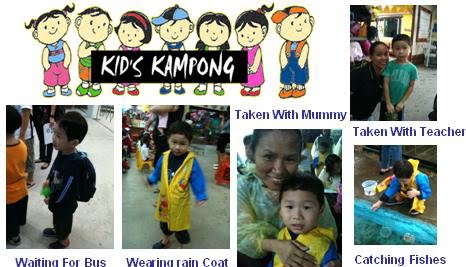
I was praying for good weather due to recent adverse climate that had caused flood & several trees to fall, nevetheless the down pour did come on the day of the outing to Kids Kampong but never fail to dampen the spirits of the teachers, parents and the many little STARs of the day, the outing went on. This is second outing experiences over a short period of time within a Term for our little STAR, I always feel excited as usual for the kids, but unfortunately have to give the trip another miss due to heavy work commitment. I was happy and thankful to learn that the trip to Kids Kampong was another success despite the rain and that the kids were having a great times while following the schedules provided to their visual support.


My wife related to me a challenge while waiting for the bus to pick them up to destination:- apparently Fabian wanted to board the bus which he saw and thinking that his bus had arrived, but was actually the second bus which was late, he got a little anxious. Fortunately, my wife & teachers were able to calm him down & redirect him to wait with verbal prompt which would otherwise lead to melt down.


Our family had been to fish farm before but has never visit an animal farm, it was really a new experience for Fabian & mummy where he got to see various animals unlike in the zoo, that are normally found in the Kampong in the 60s or 70s during the era of both my parents time. Raincoats were provided for everyone and I was glad to learn that Fabian did follow & try participate in some of the activities that were scheduled for the trip. My wife also shared that Fabian seems to enjoy himself more on pouring water back to the pond than to appreciate the fishes they caught which were put inside the container, this is the first time he has come close contact with the kampong fishes. With this experience, we will be able to predict his behavior and more confidently manage when we organize our own trip to bottle tree village at first opportunity near our area in the North. The pet show was another main highlight which the kids enjoyed very much but was told that Fabian demand for snack during the show and was re-directed to various teachers to practise his request before he followed agenda to have the snack after the show ended, I had a good laugh and feeling with joy when I heard my wife sharing with me on this, kudos to the trs and coach for making a frutiful ending to this wonderful trip.

Take this blessing to share some updates in our learning journey with our little STAR

Wall schedule- we had modified and align to new IEP goals & objectives and also lower the schedule board to let him interact as he transit to his next activity area.

Sound Therapy: He is on 3rd Cycle Disc 2 currently, show signs of singing & imitating a lot. Speaking more expressively with up to 7-10 words in sentence construction.

OT: Better body joint co-ordination, increase & varies his exercise routine more to promote interaction such as rolling, throwing, bouncing ball to each others on top of squatting, jumping, sit up, rolling and crawling.

Kindermuzik: "Imagine That" series in second week, enjoy greatly to elevate his social interaction, vocabulary and language skill . In-corporate see-saw, slides and swinging movement to daily exercise as well to improve co-ordination.

Literacy Skill: Sequence and recall, Spelling, Form sentences in relation with Who, What, Where, Why, Colour, Activities & Function. Introduce Vocab of daly items & Quiet reading to practise his receptive skill, regulation and joint attention. We are start expedite our teaching with him on animals-sound-home to generalize his learning and understanding on the subject of Animal.

ST: Fabian is able to tell in complete sentence picture flash cards for noun+verb+direct object in 6-7 words, he is now learning to form other sentences using series of 3 pictures linking together for (Noun+Prepositional Phrases+Verb), also get to expose to concept development on Bubbles, Slides, Water. Practise picture description to elevate his comprehension and expressive language. He is strong in understanding numbers, colour, where & shapes. We are working with him on saying more complete sentence other than yes or no. Eg "Fabian, are you tire?" He is expected to answer: "No, I am not tire" He is more expressive nowadays able to describe what we are doing at home. He also learns, sings & imitates a lot from watching disney playhouse channel, get more interested watching Teletubbies, Noddy VCD. Even sometime, he like to play pretend game as if he is the therapist talking to my wife and me or even teachers in child care center, we will try to listen and understand the explain or ask him more if we know what he says to let him recall why he is saying that. We also encourage Fabian to practise giving instruction to adult example during fixing of Mr Potato & vice versa. Eg Daddy, put on shoes Or Daddy take out shoe.

Numeric Skill: Working on number & identifying various money value, number word & spelling fr 1-5. Still focus on addition fr 1-10 with more worksheet provided to practise. able time telling for hourly, now proceed to half hourly or even quarterly. At home, aside from practise worksheet, we also ask him to turn to the time we tell him on the toy clock and also guide him to look at the clock and relate timing perspective with respect to the clock.

Child care center: Lead time to transit into the center has reduced compare to first 3 months, where he would usually sit outside to wait for ask for more time before entering the center. Now he is able to go straight in, and sometimes when I drive my wife and him to center I will drive up to the front of the center by the road to let him walk in straight to varies the drop off point, instead at the car park behind the center.

His weakest link is perhaps in the area of ART, we will continue to give him more opportunity to practise coloring, request for color, color within the line etc to improve him from time to time by integrating with some of our home programs for him.

It has been a great blessing that our Little STAR has come thus far and improving at every baby steps and opportunities that come along from the various service providers teachers.

Yesterday can be filled with regret that you won't let go of, or even past successes that you hang on tight to, or simply fond memories that make you smile. Tomorrow can be filled with I'll be happy when I accomplish x, y, z, or fear of the unknown, or excitement on all the possibilities that are ahead of you. Today brings new possibilities. Today brings new choices. Today brings new hope. Today brings the ability to appreciate where you've been, where you are now, and where you are going.

Winners Statement:-
"What we are today comes from our thoughts of yesterday, and our present thoughts build our life of tomorrow. Our life is the creation of our mind."
~ Buddha


Saturday, July 24, 2010

Sharing An Inspiration on the "7 Principles of an Eagle" ~By Author Dr. Myles Monroe


1. Eagles fly alone at a high altitude and not with sparrows or mix with other smaller birds. Birds of a feather flock together. No other bird goes to the height of the eagle. Eagles fly with eagles. Never in a flock. Even when Moses (Old Testament Bible) went to commune with God on the mountain, he left the crowd at the foothills. Stay away from sparrows and ravens. Eagles fly with eagles.

2. Eagles have strong vision, which focuses up to 5 kilometers from the air. When an eagle sites prey- even a rodent from this distance, he narrows his focus on it and sets out to get it. No matter the obstacle, the eagle will not move his focus from the prey until he grabs it. Have a vision and remain focused no matter what the obstacle and you will succeed.

3. Eagles do not eat dead things. He feeds on fresh prey. Vultures eat dead animals but not eagles. Steer clear of outdated and old information. Do your research well always.

4. The Eagle is the only bird that loves the storm. When clouds gather, the eagles get excited. The eagle uses the wings of the storm to rise and is pushed up higher. Once it finds the wing of the storm, the eagle stops flapping and uses the pressure of the raging storm to soar the clouds and glide. This gives the eagle an opportunity to rest its wings. In the meantime all the other birds hide in the leaves and branches of the trees. We can use the storms of our lives (obstacles, trouble, etc) to rise to greater heights. Achievers relish challenges and use them profitably.

5. The Eagle tests before it trusts. When a female eagle meets a male and they want to mate, she flies down to earth with the male pursing her and she picks a twig. She flies back into the air with the male pursuing her. Once she has reached a height high enough for her, she lets the twig fall to the ground and watches it as it falls. The male chases after the twig. The faster it falls, the faster he chases until he reaches it and has to catch it before it falls to the ground, then bring it back to the female eagle. The female eagle grabs the twig and flies to a much higher altitude pursued by the male until she perceives it high enough, and then drops the twig for the male to chase. This goes on for hours, with the height increasing until the female eagle is assured that the male eagle has mastered the art of picking the twig which shows commitment, then and only then, will she allow him to mate with her!
Whether in private life or in business, one should test commitment of people intended for partnership.

6. Eagles prepare for training. When about to lay eggs, the female and male eagle identify a place very high on a cliff where no predators can reach; the male flies to earth and picks thorns and lays them on the crevice of the cliff, then flies to earth again to collect twigs which he lays in the intended nest. He flies back to earth picks thorns and lays them on top of the twigs. He flies back to earth and picks soft grass to cover the thorns, and then flies back to pick rugs to put on the grass. When this first layering is complete the male eagle runs back to earth and picks more thorns, lays them on the nest; runs back to get grass and rugs and lays them on top of the thorns, then plucks his feathers to complete the nest. The thorns on the outside of the nest protect it from possible intruders. Both male and female eagles participate in raising the eagle family. She lays the eggs and protects them; he builds the nest and hunts. During the time of training the young ones to fly, the mother eagle throws the eaglets out of the nest and because they are scared, they jump into the nest again. Next, she throws them out and then takes off the soft layers of the nest, leaving the thorns bare. When the scared eaglets jump into the nest again, they are pricked by thorns. Shrieking and bleeding they jump out again this time wondering why the mother and father who love them so much are torturing them. Next, mother eagle pushes them off the cliff into the air. As they shriek in fear, father eagle flies out and picks them up on his back before they fall, and brings them back to the cliff. This goes on for sometime until they start flapping their wings. They get excited at this newfound knowledge that they can fly and not fall at such a fast rate. The father and mother eagle supports them with their wings.

The preparation of the nest teaches us to prepare for changes;
The preparation for the family teaches us that active participation of both partners leads to success;
The being pricked by the thorns tells us that sometimes being too comfortable where we are may result into our not experiencing life, not progressing and not learning at all. The thorns of life come to teach us that we need to grow, get out of the nest and love on. We may not know it but the seemingly comfortable and safe haven may have thorns;
The people who love us do not let us languish in sloth but push us hard to grow and prosper. Even in their seemingly bad actions they have good intentions for us.


7. When the Eagle grows old, his feathers become weak and cannot take him as fast as he should. When he feels weak and about to die, he retires to a place far away in the rocks. While there, he plucks out every feather on his body until he is completely bare. He stays in this hiding place until he has grown new feathers, then he can come out.

We occasionally need to shed off old habits & items that burden us without adding to our lives...

Winners Statement:-

"You cannot control what happen to you, but you can control the attitude towards what happens to you and in that, you will be mastering changes rather than allowing it to master you" ~Brian Tracy


Special Needs vs Mainstream School?

I had just attended an open house in sped school to have an insight and glimpse of what software was installed, understand that there are great many number of kids in waiting list. Some parents may prefer their kids to be in mainstream ater EIP, while others may be happy just to get a place in the sped school that can maximize the kids potential in learning, ultimately it is not the academic alone that determine the success of the child learning road map, but his/her life skill of independence are as important in the aspect of cognitive ability, functional communication and social integration with the community. Having the right learning environment and providing the necessary education plan for the kids to tailor to his/her needs are critical success factors. The hard part is that while the parents/care givers may be coping with a single profile on their kids in the spectrum, teachers and special educators have to cope to cater students within the range of spectrum with multiple profiles. Putting things in right perspective base on mutual trust and learning, to encourage & motivate each others along can help to optimize the outcome in learning.

I happened to read an article on the subject a month ago from a speech pathologist and hence will like to take this blessing to share in my blog post:-
--------------------
Start Of Sharing
--------------------
Parents often ask the question…
“Would a mainstream preschool or school be suitable for my child?”

To be honest with you there is an incredible amount to consider when answering this question and of course all children with autism are very different. So I’d like to give you some advice to help when you are making this decision…

1. Your child’s happiness is of utmost importance! So if being in a mainstream school allows your child to be calm and happy and be supported in a safe and nurturing environment, then this is wonderful! A lot of children with autism experience high levels of anxiety so this is very important to consider when finding the right setting for your child to thrive in. If your child is unhappy and on edge then they will most likely be in ‘survival mode’ for most of the day and will not get anything out of their day… just unhappiness.

2. Will your child ‘thrive’ in a mainstream environment? Is the teaching pitched at the right level for your child? The last thing you want is for your child to be getting very little out of their day and slowing down the rate of their development. If the teaching is pitched at a level that is too difficult for your child then you might find that they are only learning 1-2% of their day… and that’s a pretty scary thought!

3. Children with ASD often find it very difficult to shift their attention from what they are doing to what a teacher or a peer would like them to be involved in. This is very much related to their challenges with joint attention. If this is the case for your child then possibly a more structured and specialised environment that incorporates the use of visuals and other specific teaching strategies could be far more effective your child.

4. It is important to remember that cognitive and academic skill advancements should NOT be the only focus of your child’s schooling. School/preschool is also a valuable environment for the development of ‘meaningful’ peer relationships and improving skills that will help your child function more ‘effectively’ and practically in their day to day environment. Please consider which type of schooling will help support this, because at the end of the day social and emotional intelligence is what will help your child live a happy and fulfilled life.

5. Finding a setting where the staff understand autism and the importance of getting to know the ‘individual differences’ of your child is critical. In saying this I have also consulted to mainstream settings where the staff know very little about ASD but they have a real willingness to learn and are incredibly motivated to help the child as best as they can. This passion counts for a lot! Each preschool and school are very different so it is critical that you do your homework and shop around.

6. Many people underestimate what a child needs to be able to ‘comprehend’ to keep up in the classroom The conversations and topics that are discussed can be quite complex and abstract. I went to see one of my 5 year old clients at school a few months ago and the children were expected to be able to look around the playground and tell the teacher what was ‘man made/artificial’ and what was ‘natural’. This kind of activity is extremely challenging for a child with autism who has difficulty understanding and interpreting the world around them!
------------------
End Of Sharing
------------------

Teaching a child with ASD requires a different perspective, flexibility and creativity, and constant learning on our part and the rest of the staff within the special education team who see him. We are all not perfect but nevertheless, situation can be improved and compensated with effective communication and close collaborative partnership. While the parents very often are contacted about problem, Teacher's role in this communication to relay knowledge and recommendation to parents are as important, parents need to hear some success stories too from the teachers. Kudos to all the SPED professionals for doing great work in continuous improvement for the future of these special community.

Winner's Statement:-

"Beauty is not in the face; beauty is a light in the heart."~ Kahlil Gibran

Sunday, July 11, 2010

Term 3 Outing 1- Visit To The Zoo (9 July '10)

The success of this zoo outing gave me an opportunity to appreciate the great work & worth while effort that have been put up by teachers over the past year and a half in EIP, be it 3 months, 9 months or more since we first cross path. I had not failed to attend any outing in the past terms but was not able to attend this time round due to work commitment, nevertheless still rejoiced and delighted to know that our little STAR was having a great fun & enjoyable time watching the animals and show performance.

Just recalled the first outing we attended with Fabian back in 2009 Term 1 which was also the zoo outing, my wife and I were just new parents of a child with ASD then, nevertheless we just go about preparing what we think is best for his learning having little knowledge on the challenge that was about to surface due to his unique learning and behavior characteristic.

Back then, resource use was very little as we do not yet equip ourselves enough to maximize our teaching for Fabian at home to ready him. I did the animal fresh cards and using physical object to associate, but Fabian was at concrete level & non verbal, attention from him was still very poor. We can only hope for the best to manage success.

On the actual day, after teacher briefing, we experience the first challenge from Fabian, he became anxious and start to escalate as everyone starts to board the bus. He would start crying and screaming, so I had to drive him there instead, his perspective thinking and rigidity to change is lacking then, his non-verbal had also added more challenges to his behavior.

During the zoo outing, Fabian had to be carried most of the time as he still very much in his own agenda, schedule was simple and using stickers to mark off at every transition point. Snack time was when we practised his request.
Nevertheless, we were glad and delighted to have achieved objectives to his learning in general.


This year term 3 outing to zoo also enble the teachers who had taken Fabian in the past, to acertain some improvement Vs 2009, that he is very much regulated though behavior challenge still exist where we least expected at times, at least he is motivated to take the bus with the group and able to follow others agenda in walking. He is more verbal, able to identify & associate with the animal better, able to be more expressive in describing some of the animal features in simple sentences. He is much more aware of his teachers & peers now taking photos together or walking hand in hand along the trip. His perspective thinking of zoo has also improved greatly.


The results observed are external, I must acknowledge that internally, the teachers all must had put in great effort behind the scene to ready the outing & maximize positive outcome. Back at home, we are much more resourceful now when teaching Fabian to ready for this zoo trip.

We used a big picture book to walk through with him At The Zoo, using L-R, T-B sequencing to tell the animal name. We had even took out 2 animal puzzle piece sets to let him Work By Myself. To train his expressive language, we use picture card pairing with sentence matching. Photo animal cards and spelling also help him to associate the word with the animals. Physical objects also use in recalling with him after the zoo trip and also we have dedicated a home program for painting/coloring today. Will do another round on Sunday for the rest of the animal pictures we brought home from the trip.


The 2 goals set were mostly achieved with prompt 5 and at the end of the outing, Fabian & Mummy brought home with them some wonderful memories & great learning experience towards more independence.

Thankful to Teachers who were leading the various children groups for the good guidance & great support on this outing trip. At the end of the day, every child is a winner having brought back with them some invaluable great learning experiences from the visit to the zoo.

Winners Statement:-
"We are at our very best, and we are happiest, when we are fully engaged in work we enjoy on
the journey toward the goal we've established for ourselves. It gives meaning to our time off and
comfort to our sleep. It makes everything else in life so wonderful, so worthwhile." ~ Earl Nightingale

Friday, July 2, 2010

Sharing An Overview Of Learning & Behavior Challenges Often Found In Children With ASD

Challenging Behavior

Child with ASD often seem to march to the beat of their own drummer. What motivates them, please them, and what interests them can be different from other children. Pleasing the teachers, defying the teachers, impressing other children, mastering new skills, pleasing their parents- these fundamental motivations are not necessarily lacking but may be less pressing in children with ASD. Instead, other motivations may be more pressing, such as being allowed to do their preferred repetitive activities, talking about their favourite subject, or avoiding unpleasant sensor stimulation. In the midst of all these challenges, the child with ASD often has to work extra hard to do what may come easily to the other children. Each child with ASD are also unique by himself/herself, what comes easy for one child with ASD may be slight hard or very hard to another child within this spectrum. Anything involve complex language is likely to require additonal concentration and mental effort in a child who already may be challenged in the area of sustained attention. Is it any wonder, given all these factors, that they may sometimes become noncomplaint, irritable, or shut down and withdrawn? But all is not lost or hopeless if we know how to take steps to troubleshoot their behavior, in helping them to learn more effectively.

Difficulties with attention is one of the most frequently reported problems for children with ASD in the classroom, understanding the attention deficits will help you to intervene in a way that has the best possible chance of working. A good way to describe the attention of a child with ASD is that he has trouble managing it. In other words, he may have difficulty putting his/her attention where it needs to be, he/she may have trouble sustaining his attention or sticking with something once he has started to pay attention to. He/She may have trouble selecting out the important things to pay attention to. He/She may have trouble shifting or moving her attention from one thing to another, or he/she may shift his attention to the new thing, only to derail and move his attention back to something that is more important for her(his own preoccupations, or the last thing he was doing). The description above offers many hypothesis in any behevior problem that hinder join attention.

Having said that, we can perhaps evaluate and analyse the problem behavior by first examine the behavior and then seek to identify the function served by the behavior using this ABC principles of Behavior Analysis:-

1) What are the "A"ntecedents(what comes before the behavior)?
They are analyzed for precipitating factors Eg. what activity or task ...
2) What is the "B"ehavior itself? Mood swing, throwihng tantrum, screaming, melt down, covering ears, flapping/flcikering hands etc...
3) What are the "C"onsequences(what comes after the behavior and may be serving to reinforce and maintain it)? Eg Losing interest & attention, not following agenda etc...


Determining the cause of behavior is critical to developing an effective intervention strategy. It will then allow you to develop appropriate modification to task demands, so we can achieve a win win outcome and help the child cope better into acheieving the goals.

Cognitive Strength & Weakness

Various Aspect Of Learning Challenges & Definitions:-

Language
Phonology – Structural aspect of language, refers to speech sound of language
Ability of a child to discriminate among the sounds that others are making when they are speaking and can she produce the sounds consisently and understandably

Syntax- Grammar
Using and understand word ends and using and understanding correct word order

Prosody- refers to melody of our speech-pitch,volume and rate changes that carry meaning and information, universal impairement a among child with ASD who usually speak with flat monotone

Semantics- refers to meaning of words, relationships among concepts
Ability to reason about the concept , comprehend the meaning in a general way. Child with ASD may lack or misuse of mental state verb such as “think”, “expect”, “hope”, “remember”.

Discourse- refers to ability to put together a higher level of connected speech, such as telling a story. Basic “WH” question is a challenge, Who, What & where are easier with photo level representation as visual aid to help child understand but the more abstract one like When, Why & How will be expected from their level of vocabulary.
Often learn language in a formular way like as a whole chunks rather than putting together new sentences with new words to means new thing

Pragmatics- refer to social use of language which includes analysis of speech acts or functions including things like greeting, commenting, asking questions, answering question, agreeing, requesting, protesting.
Child with ASD use their language more to regulate their environment than to be social.

Written language
Usually their strength in the area of decoding what they read & even spelling
The lack of fine motor skill may be hinderance to their ability to understand what they read and mechanics of writing what they want to say.

In summary, child with ASD has persistent problem with structural aspect of language, they may do well in concrete language but have increasing difficulty as the language becomes more complex, hierarchically organized, abstract or inferential.

Memory
Visual memory- area of strength
Memory for music is sometimes a real talent in children with ASD
Memory for verbal material can be quite difficult, for eg they do not use frame work of the story to help them remember details, but instead remember details in the story as if they were unrelated bits of information.
Sometimes they may show extraordinary memories for certain type of material in particular events and facts in great details. But yet there can be impersonal quality to these memories, as though the child is remembering facts and not recollecting a personal event. And the same child can have trouble remembering something you thought he had learn yesterday. Probably something to do with attention, with what the child consider as important, interesting or easy to remember. The challenge is then in finding a way to make the unusual ability useful in the real world.

Attention-child with ASD have a striking disconnection between their ability to attend to preferred topics or activities(where attention span could be relatively long) and their ability(desire) to attend to non-preferred activities.
-Motivation is crucial in helping them optimize their attention when performing task which they may not intrinsically interested/enjoy.
-Make material as interesting as possible, keep requirements for sustain attention a reasonable level and use external reinforcers as necessary(not necessary candy, but checks list, stickers, opportunities to earn a preferred object or activity)
Some help to focus child attention includes:-
-Using hands on activities
-Relating the material to subjects of interest to the child
-Giving imtermittent brief motor break(running an errand, erase board)
-Anticipating a simple quiz with opportunities to earn powerful reinforcer for good performance.

Executive Function-refers to cognitive and decision making activities just like an head of a organization include processes as:-
- organizing task in proper sequence
- suppressing inappropriate or irrelevant response/distraction
- Keep attention to the task in hand
- Putting forth mental effort or concentration on a task over a sustained time/duration
- Initiating problem solving activities/request for help
- Holding one part of information in mind while working on another so the two can put together at the end
- Calling to mind previously learned information without any cues or prompts
- Working for reward that is in the future instead of doing what brings immediate gratification
Most of these functions depend heavily on the frontal lobes of the brain, and depending on the age and intellectual capacity of the child, our job is to serve as the child frontal lobes(helping her to organize and inhibit by setting up external structure) or to help her develop strategies to do these things for himself.

Visual spatial skill-refers to skill that require you to perceive basic visual element(shapes, colors,movements) as well as relationships among them. In additional with motor component such as cutting out shape, copy words or designs, quickly moving pegs fr one hole to another, completing puzzle,hitting a ball.

Social Cognition-refers to understanding the social world
-Ability of a child to grasp what others are feeling, understand why they feel and behave as they do, and understand what is the expected of him.
Components include:-
Processing faces
-only recognize exaggerated expression of emotion to happiness, fear,sadness or anger.
- focus on unusual aspect of the picture such as hairline or mouth or an object in the back ground,rather than scanning the character’s eye for clues to their emotions and reaction.

Empathy- understanding and recognizing his own and other emotion with correct response. If a child may understand someone’s else emotion, he may not respond automatically with the correct response. Eg teacher suddenly has bleeding from nose, he may smile to response to his empathy rather than feeling shock and scare.
-Need to help her recognize and label his own emotion in relationship to child capacity for empathy.

Theory Of Mind- refers to the understanding we have of others’s mind, very often this is absence in child with ASD where they perceive and take it/response literally as what he perceive and not thinking about what others may think differently from the situation.

Friendship- children with ASD often have immature and oversimplified notions of friendship.
They may think that anyone they know or have played with once is a friend, not understanding that true friendships prefer each other because of common interests, feel positive emotion when interacting and share special bonds of confidence and trust.
- duties of parents and trs to cooperate in picking some likely children who share specific interest with the child to seek friendship
- need coaching in group interaction for turns taking, social rules reinforcement

Motor Skill – may be clumsy and uncoordinated with fine motor skill resulting in poor hand writing, coloring and drawing and manipulating objects in hands on lesson

Splinter Skill-area of ability that are above what the child can do in other areas
-Special talent
- some children can use written words or sentence as a gateway for communication.

Hope this sharing can create a good initial insights into understand children with ASD. Every child within this spectrum is unique, and hence has different need. Knowing more to understand individual needs of the child will help each parents, caregivers, teachers & therapist to cope better in managing the best outcome.

Winners Statement:-

"A hug is a smile with arms, a laugh with a stronger grip." ~ Terri Guillemets


Sunday, June 27, 2010

Sharing Of An Article Post On How to Be a Friend to An Autistic Person

Taking this blessing for new Term opening to share an article I read during the June holidays, hope they are useful for those who walk and advocate on a similar learning journey, be they parents, family members, friends, care givers, educators or therapists.

People with autism may have a difficult time making friends or being one, for the fact that most of them have limited social skills, which makes it hard for them to relate to others or be a friend. In addition, many have not been taught social and communication skills or how to relate to them. Because of these difficulties that autistic people may experience, the question is, how can you be a friend to them?

* I believe it is imperative that you must be a friend to yourself first. This is accomplished by understanding yourself and nurturing yourself as you grow.

* To be a friend to an autistic person, you want to become strength to him or her. This is done by encouraging the autistic individual, not by putting them down with criticism, which will cause discouragement and low self-esteem.

* Many individuals with autism have difficult behaviors, because of their various levels of the disorder which creates numerous challenges. This may vary according to their age and environment. Be patient with the person with the disorder of autism and let him or her know you do care about them and want to be their friend. Be on common ground with them.

* It is important for you as parent(s), caregiver(s) to become sensitive to the disorder of autism. Practice companionship. Sometimes it is wise not to talk at times but be silent, listen to what the person is communicating or trying to say. I have learned, there are times when the wrong words or not using the right words can destroy friendships that are in its embryo stage.

* To be a friend to an autistic person, is to try to overlook his or her faults and understand that he or she is overcoming their weaknesses, as you are overcoming yours. Be patient with the person and let him or her know you do care about them and want to be their friend. Be on common ground with them.

* I have learned, not to attempt to change or find fault with people who have the disorder of autism, but make them comfortable with your presence, give them time to get to know you. Be tolerant of these individuals and have an understanding with a forgiving heart.

* Autistic individuals are people who want and need friends just as people who do not have the disorder. They want to belong, feel accepted and loved. They may have difficulties socializing or communicating, but you can discover how to be friends with them and continue to grow with them.

* Another way to be a friend to a person who has autism, find out what their likes and dislikes are. If the person enjoys lunch, take him or her to a restaurant that will be enjoyable. If sports is an enjoyment, take the person to a baseball game or watch it with them in a park or on television. Be creative, find out what the person wants to do, what he or she likes, and enjoy it with them. You can also make new suggestions and create new ideas.

* Send an autistic person a card in the mail with encouraging words on it, or a letter to say you are thinking about the person and you care. This can be done once a week or whenever there is a special occasion or just for fun.

* Bring the individual some treats, home made cookies, or candy. Many autistic children will appreciate balloons, so will adults as a gesture to be friends with the person. Use your imagination, and you will discover that making a friend with a person who has autism will be rewarding.

Winners Statement:-
When you are in a challenging situation, I encourage you to think of that little engine who didn't give up. He/She didn't complain and say why me. He/She didn't lose faith. He/She didn't stop and fall down the hill. He/She continued along his/her journey until he/she found the right resources to help him/her along her path. The right resources could be one of you, who may make a great impact in his/her learning & growing up so as to manage future independence better.

Saturday, June 12, 2010

E Time Sharing- June Moment & Update Of Our Little STAR

It has been more than 2 weeks since I last blog posted on our little STAR school outing for his end of term shopping experience, several new grounds were broken and miracle of achievements made since then, once again I am really excited to take this blessing to share.

Moving on from where I last left, the end of term PCN is another great session in sharing our children's learning journey together with the teachers, get updates from principle on things happening and what is to come in the new term, more imporantly to acquire new knowledge sharing from consultant in managing some learning & behavior challenges in our walk with Autism. The topic on Task Analaysis provides me with better insight as to how we can seek opportunity in our daily life with our kid in breaking down some tasks into small manageable ones and work backward until he gain independence. I am proud that our little STAR, Fabian has managed to achieve 2 tasks through this inspiration namely buckle of seat belt & button of shirt, while before that he use to do only the last step or 2. We will work with him on other independence skills such as putting on clothes or socks, where again he only do the last steps or 2 and has potential to improve using similar task analysis approach.

Fabian also has the previledge to work with more different adults since Term 2, with enrollment to pre-school child care center, engaging ST, Special Need Therapist for Literacy & Numeric Skill Development. We are glad that our little STAR is able to adapt to different teaching styles and approaches whether bottom up or top down and still enjoy & have fun learning any new skills being introduced. The inputs from various service providers certainly have given us better understanding as to how we can work harder in partnership & do better in self empowerment to improve the child's learning & development further. Our challenges is to sync all of these collective effort from various teachers & therapists to meet at the center in optimizing Fabian's learning potential to maximize positive outcome.

Fabian had completed 2 rounds of sound therapy and currently taking his 2 weeks break before resuming with third cycle. In receptive listening, his attention span has increased. For expressive listening, he is singing more and playing with sounds with much more awareness. His executive function has also improved, more eye contact and has better sense of ryhthm.

He had also recently completed his 4 month kindermuzic which has further enhanced his focus, listening skill, language and literacy, hand-eye co-ordination & offer opportunity to elevate his social skill woth other kids.
Effort from OT has also been rewarded with better return in find motor skills such as balancing and body joint co-ordination and movement. Our recent discussion with the therapy has agree in focusing on his sensory & posture control while aligning with ST on the same note in communciation.

Literacy skill development has enhanced and improved his tracking skill from LtoR & TtoB. He is also able to name & recognize more line picture cards & photo cards on object, transport or animals via fresh card. Applying the habits of using What, Where and Why in working with him or during real life situation and modelling for him on the appropriate answer according to the context for better receptive language and sentence contruction is also on going. Pairing of things that go together in relation to our daily life application, cause and effect in relation to child behavior. Look, Listen & execute, pretend play on making ice-cream using play doh etc...are some of the skill introduced. We have also take opportunity to work on Yes/No during our literacy home program via discrete trial to acertain his understanding. Making use of the ice-berg framework to understand what is behind any negative output from the child instead of just conclude by seeing the tip of the ice-berg really help to progress in managing any successful outcome. We are almost certain that he knows & understands the use of yes & no. Else perhaps we can introduce "Not sure" for any uncertain element that arises beyond his knowledge capacity before we teach the child to get familiar.

For numeric skill, he has covered number 1-100, rotational/random sequence, money value, time telling.

For ST, we have learnt to integrate imagery & language, what are the two type imagery namely symbol(parts) & concept(wholes). How to apply it in sensory-language play with the kid through touching and gesturing. we have also learn to use more alternative verb to make request like need, like, see or hear. And also making request using May I... or Can I...He is now able to answer to some common questions when prompted. We are currently working with Fabian to comment about an action in our daily life routine as well as with the help of action picture cards in collaboration with ST.
I have also had a discussion with the child care center teacher in charge and truely grateful for her & the team for showing great empathy and support to Fabian, feedback has been positive so far with improvement over previous 2 months, I had also share some insight in managing Fabian's learning & behavior characteristic. I have also encouraged the teachers to feedback any challenges encounter along the way, so that I can see what we can do to improve at home with more trial and practise.
The June holidays have bee great so far,we had crossed over the causeway for a weekend lunch & shopping on the first week in JB, and attended a chalet resort holidays at Costa Sands in Downtown East on the second weekend. During holiday weekdays, Fabian will attend full day child care center except Thur & Fri(2nd half) as he is engaged with therapists on these 2 days, weekend is a precious time spent for Fabian's home programs and practise, plus some family engagement to strike a fine balance.
We still have some 2 weeks of holidays to go before new term opening, just wish to take this blessing to express my heart felt gratitude to all who have crossed path with us and supported Fabian in our stand with him.

Recently, Autism has been in the news, thanks to 2 NTU students who had taken their time & effort to shed light on the plight of adults with autism as their final year project, I am so touch for their worth while effort to bring more awareness to the society & community at large. To us parents of child with ASD, each individual child in this spectrum is unique, we need more empathy and understanding from the general public. Walking on a journey with Autism is actually our work-life balance:- We work hard to create an impact for their future life, so that the child can grow up to be independent and more manageable adult as their parents age gracefully. Some days, hope is all we need, other days, hope is all we have.

Winners Statement:-

"Limitations live only in our minds. But if we use our imaginations, our possibilities become limitless." ~ Jamie Paolinetti